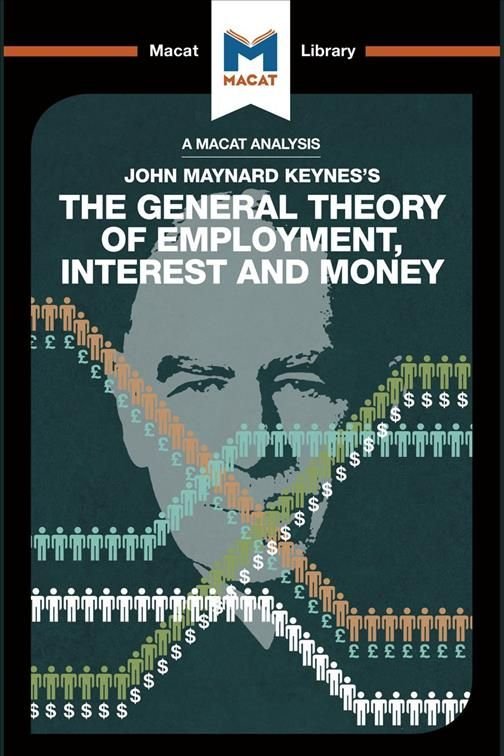
An Analysis of John Maynard Keyne\'s The General Theory of Employment, Interest and Money
John Maynard Keynes\'s 1936 General Theory of Employment, Interest and Money is a perfect example of the global power of critical thinking. A radical reconsideration of some of the founding principles and accepted axioms of classical economics at the time, it provoked a revolution in economic thought and government economic policies across the world. Unsurprisingly, Keynes\'s closely argued refutation of the then accepted grounds of economics employs all the key critical thinking skills: analysing and evaluating the old theories and their weaknesses; interpreting and clarifying his own fundamental terms and ideas; problem solving; and using creative thinking to go beyond the old economic theories. Perhaps above all, however, the General Theory is a masterclass in problem solving. Good problem solvers identify their problem, offer a methodology for solving it, and suggest solutions. For Keynes the problem was both real and theoretical: unemployment. A major issue for governments during the Great Depression, unemployment was also a problem for classical economics. In classical economics, theoretically, unemployment would always disappear. Keynes offered both an explanation of why this was not the case in practice, and a range of solutions that could be implemented through government monetary policy.
£6.50

Similar Deals

UTM Security with Fortinet
£39.99
From Wordery
Save 18%
Stress-Less Leadership
£14.99
£12.36
From Wordery
Save 1%

Knock Knock Money, Money, Money Receipt Catcher
£10.96
£10.94
From Wordery
Save 4%

Knock Knock This Week Pad
£6.95
£6.71
From Wordery
Theories of Childhood, Second Edition
£26.50
From Wordery
Save 20%

Shut It Down
£15.99
£12.86
From Wordery
Save 23%

Nourishment
£18.99
£14.63
From Wordery
Save 6%

Artisan Cheese Making at Home
£22.50
£21.30
From Wordery